Skip to content

Child Care Institution · Uttarahana, Basudevpur

Introduction to Draupadi Mahila Samiti

A calm rural ashram beside the Bhargabi — serving children with devotion, education, and care since 1978.

  • Est. 1978
  • CCI · Puri district
  • Holistic care for boys 6–18

Registered society

Balashram under government supervision — grant-in-aid from 1979–80 onward.

The DRAUPADI MAHILA SAMITI (Child Care Institution) is located near the rural village Uttarahana by the side of historic river Bhargabi, which is 07 km towards west from Chandanpur and 22 km from Puri, the abode of Lord Sri Jagannath. Amongst the rural villages, in a calm and quiet setting, the ashram breathes for building these unfortunate children with holistic development and views each of them as a milestone for the coming age. Ashram life, spread over about 2–8 acres of land, is considered a place of devotion, dedication, and pilgrimage.

The members of Draupadi Mahila Samiti, after Republic Day in 1978, dedicated themselves and started the Balashram with five orphan children. The inmate strength grew to 25, and the State Government began grant-in-aid from 1979–80. With growing demand and enrolment, government approval later raised capacity to 50 children on a regular basis, with prescribed maintenance support per inmate.

This is a home away from broken homes for these children. The ashram provides food, bedding, lodging, education, health care, recreation, yoga, proper guidance, and empowerment for their future. Children are in the age group of 06 to 18 (boys), and the Balashram functions under the prevailing Orphanage Rules and the Juvenile Justice Act, 2015, under government supervision.
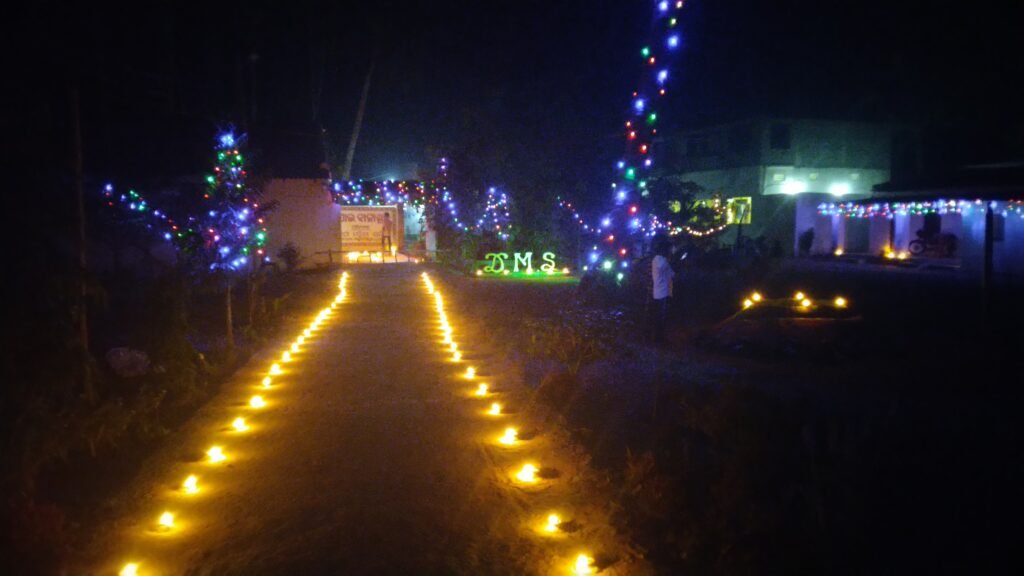
Campus view of the Child Care Institution
Uttarahana — a quiet setting for devotion, dedication, and pilgrimage.

“Each child is viewed as a milestone for the coming age.”

From the society’s vision for holistic development
1978 Balashram began
50 Authorised strength
6–18 Age group (boys)
JJ Act 2015 Legal framework

Life at the ashram

Management, wellbeing, learning, and how the community supports the children.

Management

The institution is managed by the Governing Body with employed staff. Besides the Governing Body, a CCI Home Committee and Children’s Committee support day-to-day functioning. Names and designations appear on the Managing Committee page.

Health camps & outings

Children are taken for outings and picnics on holidays; they visit science exhibitions and historical places for refreshment, outlook, group feeling, and fun.

Health and medical care

A government doctor examines inmates about once a month; a paramedical worker supports routine care. Inmates are referred to Cuttack or Puri when advanced treatment is needed.

Moral teachings

Moral education is organised through lectures, quizzes, and discussions. Guest speakers visit, and autobiographies of religious leaders, freedom fighters, and national leaders are discussed with support from organisations such as Satya Sai Seva Samiti (Chandanpur), Rotary and Lions clubs (Puri), and other visitors.

Rehabilitation

During 2018–19, five inmates were supported by relatives for education and improvement.

Needs expressed

The institution has highlighted the need for a protective boundary wall and a generator for periods without electricity.

About the institution: programmes, rehabilitation, and needs (wording lightly edited for clarity).